
As the leaves begin to fall and winter is approaching, college football fans from all over the land are tuning into the drama the sport delivers each and every week. With the temperatures dropping, the season is only heating up, with only two weeks left of the regular season. For many programs, November is a dreaded month, with marquee matchups that teams have been waiting to battle. This comes with a loss of stamina with the season’s long run-time, or at least for most programs. Recently, college football has seen many Southeastern Conference (SEC) schools take on lower-level opponents within the final weeks of the regular season, most happening right before rivalry games at the end of the season. This “waste” of non-conference scheduling might be frustrating for many diehard fans, but their usage in the modern College Football Playoff format has zero repercussions and will continue to trend towards “cupcake” matchups.
Why is this a problem, though? There is no concrete benefit to loading schedules up. With the destruction of the Bowl Championship Series (BCS), a system which combined human-decided poll rankings, eight computer rankings, schedule strength, and number of losses (Edwards, 2000), to determine the seeds for the bowls in the postseason. The problem with this system, however, was the lack of clear consistency when declaring a National Champion, because many undefeated teams could claim a title, even if they were not in the National Championship game. The decision to switch to a four-team, and eventually a twelve-team playoff in 2024 dropped the usage of computer rankings and created a selection committee to decide the qualified teams. This drop led to these decisions becoming more opinionated and allowed for the strength of schedule statistics to fade away, as the committee looked more into the team’s record and conference affiliation.
Easier non-conference schedules are not a new thing; however, as programs began to realize how early-season losses often resulted in drastic drops in poll rankings, leading to “cupcake” games, where larger programs would pay smaller ones to play. As norms were created, most power conference teams had one cupcake game early in the season to allow a team to collect an easier win and build hype around the campus and community. The goal was to minimize risk to create a valuable résumé, along with generating sales, and creating a positive narrative for the remainder of the program’s college football season. While scheduling puff games takes out some early-season battles, it creates a more solid foundation upon which programs can build a sound winning season.
Early-season blowouts are reasonable, but the Southeastern Conference (SEC) has taken scheduling to a new level. The SEC allots four non-conference games within a season; these programs are stepping-stone schools to gear teams up for their conference season. Scheduling blowouts seems normal until fanatics notice schedules in November, when they find cupcakes sprinkled in. Why is this even a common occurrence? Several SEC fan sites (Tuscaloosa News, and Southbound & Down) state multiple factors that go into “Cupcake Saturday” (Tuscaloosa News, 2025). Cupcake games created a built-in bye week preceding rivalry week, the final game of the regular season. This strategy allows teams to rest up, as a significant number of them will be entering the College Football Playoffs in December. Along with rest, the SEC has a television deal with ESPN, where many games within the early season are neutral-site primetime games. Cupcake opponents allow for universities to profit from guaranteed home games, granting one last surefire chance at ticket revenue.
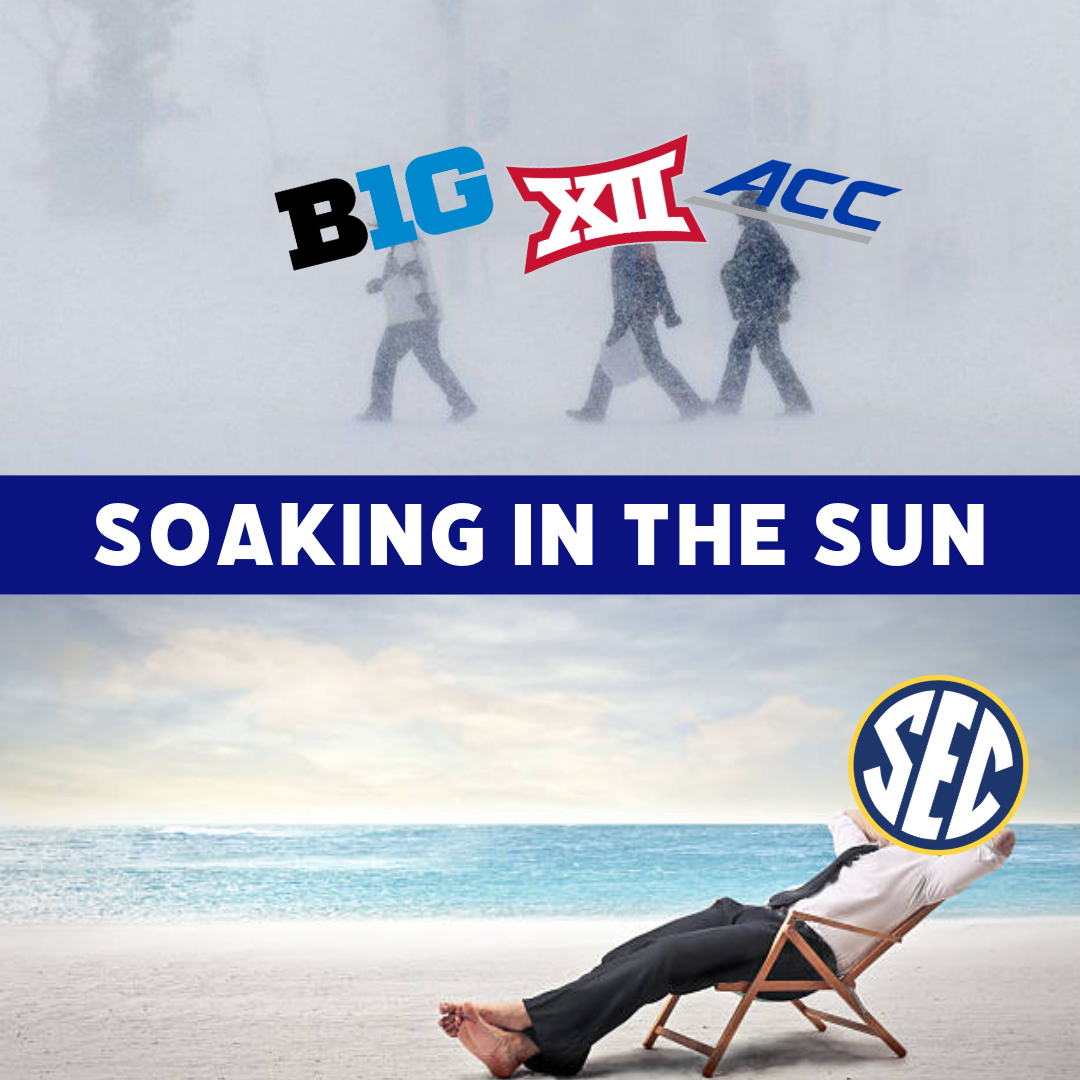
Scheduling fewer opponents seems unorthodox from the outside looking in, but these games serve a purpose within the television-focused college football community. From the neutral site thrillers to late-season profits, “Cupcake Saturday” has become a “necessity” for SEC programs. Whether fans agree with the scheduling practice or not, college football teams will continue to make their non-conference schedules easier. Anymore, the mindset is “playoff or bust”, thus any way to boost a program’s record will be further explored and exploited. So, while other conferences are battling through winter conditions, the SEC is soaking in the sun while taking their week off.






Harrison J Clark • Nov 20, 2025 at 9:17 am
Great Article ¨Big ole Mike¨
Harrison J Clark • Nov 20, 2025 at 9:17 am
Great Article ¨Big Mike¨