Schedule Changes
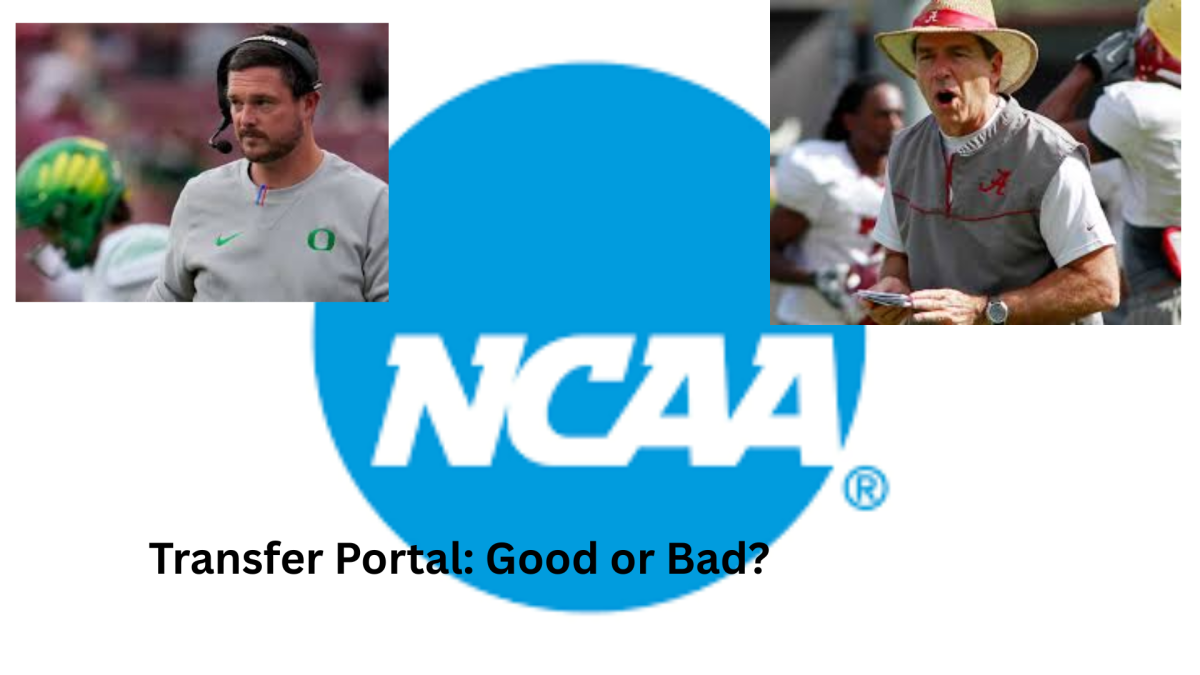
The NCAA transfer portal for College Football opens at the beginning of each new year. This year, it opened on January 2 and closes January 16. Former and current head coaches believe this is a terrible time for the portal to be open. Oregon head coach, Dan Lanning, has reiterated that the college football season should end on January 1 every year. In an article by ESPN’s Andrea Adelson, in an interview with Oregon’s head coach, Dan Lanning said, “Our National Championship game this year is Jan. 19, and that’s really hard to envision as a coach that’s going out and trying to join a new program and start a staff.” In an article by Yahoo Sports’ Bridget Reilly, quoting former, legendary coach Nick Saban, he said, “Unless they make the portal in May, which I’ve said before, to kind of match up with the academic calendar, change spring practice till after that, so that you can get your team together and work over the summer, just like an NFL team does.” In my opinion, this is a solid idea, and it would theoretically make things go more smoothly for coaches and players.
Possible Solutions
Former women’s college basketball legendary head coach Muffet McGraw, in her letter to the NCAA (National Collegiate Athletic Association), said, “Please fix the transfer portal before it irreparably harms college athletics. We need to return to a firm one-time transfer policy and enforce it consistently.” This idea by Coach McGraw is wonderful because it allows young student athletes to get a second chance at a new school. McGraw mentions that athletes who earn their degree should have the opportunity to transfer. It is important that head coaches are able to get their team together quickly and start practicing as soon as possible. When you have students transferring/flipping commitments multiple times a year, it can make that process difficult.
Not Always Better
Some athletes may think that entering the transfer portal is always beneficial; however, that is not the case. In an article by Medill Reports, Chicago’s Will McLernon, in an interview with former Houston Christian University offensive tackle, Rodney Leaks, said he would often sit at home watching college football. Leaks was stuck in the transfer portal for an entire school year. Another student, Max Hoskins, who transferred to Washington State University, made a great point that is important for athletes to think about before transferring. Hoskins said, “The portal is stressful, and it’s not somewhere you want to be.” He went on to add, “There’s very much a grass is greener on the other mentality, but that’s just not the case.” During Hoskins’ second stint in the transfer portal, he only wanted to play for a school with a strong sports business program. When he was not able to find a good fit, Hoskins let go of football and instead decided to enroll at Arizona State University. This statement can be applied to many things, but I think it is a point of emphasis. If a student-athlete wants to transfer from Purdue, they could potentially go to a less successful team or even lose their scholarship. If an athlete does not transfer to another school and they choose to come back to their former school, that school does not have to keep them on scholarship anymore.