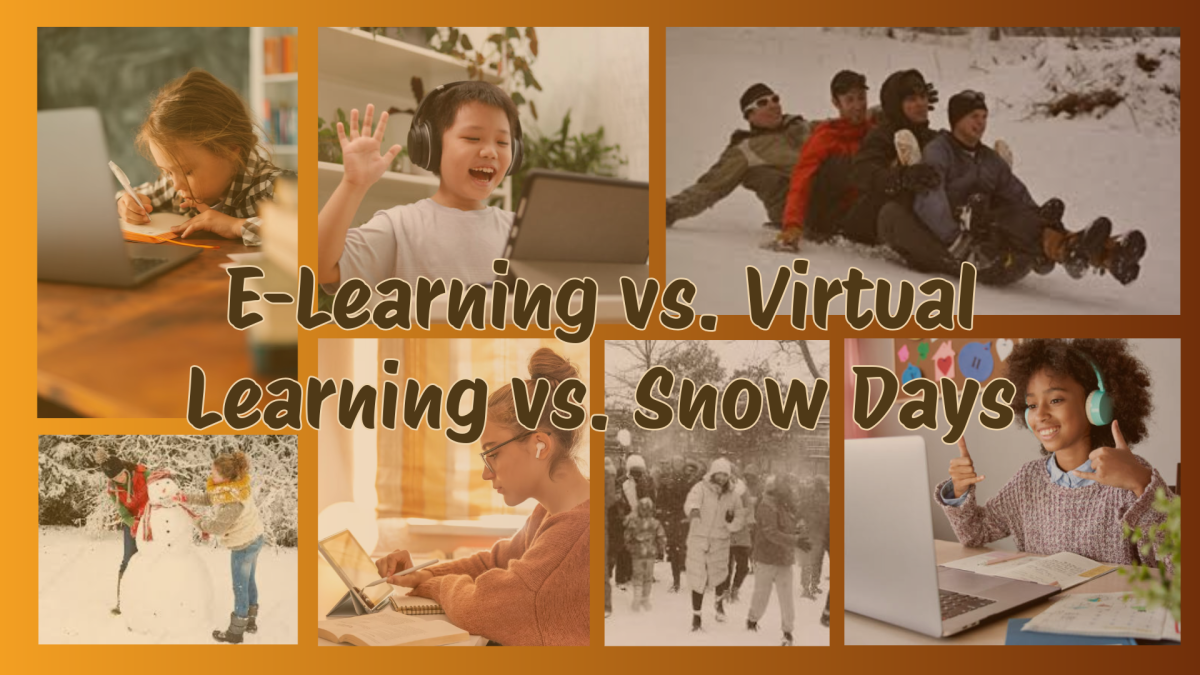
The cold and snowy weather marks the beginning of the winter season. Winter brings fun and many snow activities, such as sledding, making snowmen, snowball fights, and more. However, it also includes possible dangers from the harsh weather conditions it carries, such as slippery roads that can disrupt travel (Northwest Allen County Schools). Due to hazardous winter weather conditions, the safety of students is taken into serious consideration when determining whether schools should be cancelled or not. However, too many missed school days can cause students to fall behind in their education, which raises the question: how do these weather conditions affect the education of students in school (Northwest Allen County Schools)?
Originally, many years ago, weather conditions would result in a snow day. Kids would play outside in the snow or stay warm and cozy in their homes; either way, students got a break from school. Advancements in technology have given way to new learning opportunities for schools to incorporate into its education programs (Domogalik 2022). Technology enables students to continue learning even when they are not physically present in the classroom. E-learning is one way students can learn from home, as their teachers post assignments online. This gives flexibility for students as they independently complete their work at any time. Another example of learning from home is virtual learning, which is a synchronous class that follows a specific schedule, taught in real time by teachers (Lewiscass.net, 2025). Instructions for assignments are given in real-time and allow students to interact with their teachers for instruction and guidance.
The academic impact and practicality vary in each distance learning option (Domogalik 2022). Snow days give students a fun, relaxing break from school, and depending on the person, it can be mentally relieving, too; although, there is no academic progress among the students. Additionally, snow days add days to the school year, delaying summer break (Northwest Allen County Schools). E-learning allows students to work from home on their own time and encourages self-discipline, but it can be more challenging as students are independently working from home. E-learning is considered an asynchronous learning style as students work unassisted by a teacher (Lewiscass.net, 2025). In contrast to e-learning, virtual learning offers a specific schedule comparable to an actual school day. E-learning is a synchronous learning style that allows teachers and students to converse at the same time (Lewiscass.net, 2025). The live classes allow students to learn directly from the teacher and receive help as if in a normal classroom. However, virtual learning is more vulnerable to technical issues and negatively affects the students physically since increased hours spent in front of computers for classes and assignments contribute to digital fatigue, eye strain, headaches, and disrupted sleep patterns (Domogalik 2022).
The state of Indiana requires a 180 school site, and Lewis Cass must follow state guidelines to meet this requirement (Johnson, WTHR). The guidelines limit how often the school can use the alternative learning methods during severe weather. Lewis Cass formed regulations to meet those guidelines with the help of staff, parents, and administration (Lewiscass.net, 2025). The Indiana school laws state that snow days will be added to the end of the school year, there can be no more than three days of e-learning, and there can not be more than three consecutive virtual learning days (Lewiscass.net, 2025). Lewis Cass adopted these guidelines and provided for the academic needs of a student while also balancing their well-being. Ultimately, these distance learning tools would not be possible without technology. It has improved our education system by overcoming the obstacle of learning efficiently despite harsh weather conditions.