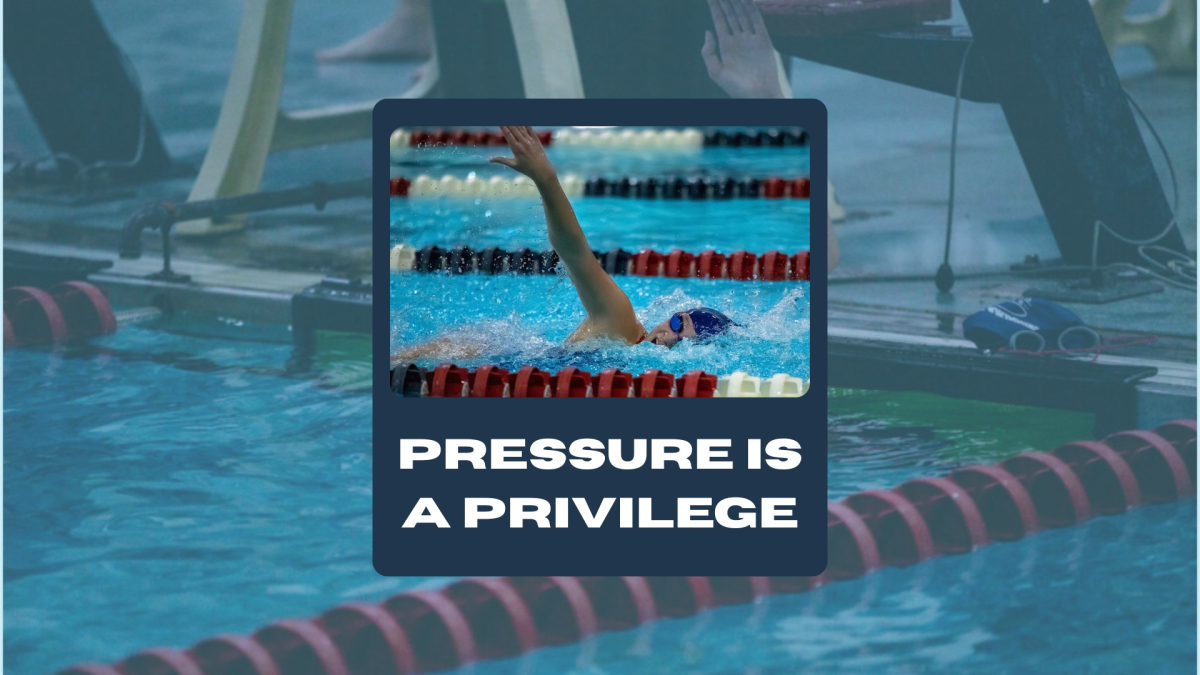
The whistle blows, the crowd gets silent, the water is calm, but my mind is filled with nerves. Shaking, I step onto the block, anxious, but confident. As I hear those familiar words, “Take your mark,” I steady my breathing and lower my hands to the edge. As the buzzer sounds, I push hard off the block, and as I dive into the water, every worry and thought disappears from existence. In the water, all the doubts I had before are replaced with focus and determination. Swimming is not just a sport for me. Instead, it is a part of who I am.
I started swimming at a young age and had no idea the impact it would have on my life. What began as swimming a couple of days during the week, learning every stroke, turned into something I could not imagine my life without. As I grew older and stronger, I was able to start competing in meets on the weekends. Practicing almost every day of the week and racing on weekends throughout the year not only enhanced my skill level in the water, but it also taught me the value of discipline. However, at the time, I never knew that as my commitment to swimming grew, so did the expectations and pressure I put on myself, both in and out of the pool.
Like most things in life, swimming was never a challenge-free activity. As I entered high school, I was faced with great pressure in both my academics and extracurricular activities. As my workload increased, my anxiety did as well. With multiple assignments each night on top of swimming late in the evening, the pressure became too much to bear, causing me to lessen some of my passion for swimming. While I still loved the sport, the thought of not being able to keep up with my grades and perform well in the pool haunted me throughout the day. From there, my anxiety only increased. Before races, I would have trouble breathing, feel nauseous, obsess over my times, and need constant reassurance because I was afraid I would disappoint my coaches or teammates if I did not perform to the best of my abilities. Losing a race would feel like the end of the world, not because I was upset with myself, but because I thought I was letting other people down, and it became almost impossible for me to enjoy swimming in meets. I remember telling myself, “If I lose, people will think I am not good enough.” After trying to ignore the anxiety and pressure and talking to my coach about it, I realized there is no way to truly rid myself of my anxiety, so instead, I came to terms with it. I practiced breathing and told myself positive affirmations, allowing myself to accept that I could not be perfect all the time. It was a very slow process, and for many days, I thought the nerves would never settle. Luckily, I was able to lean on others in my life, and through all my ups and downs, I learned one of my favorite sayings, “Pressure is a privilege.”
Since learning this phrase, I felt more confident in my abilities, not worrying about trying to please everyone, instead focusing on myself and my race. It not only taught me leadership, but also how to be mentally tough through difficult times, and it strengthened my ability to manage my anxiety. This setback only made me stronger, not only in the water, but also in who I am as a person. It showed me I am capable of overcoming some of the most challenging obstacles in my life. Swimming taught me that success is not always winning, but instead it is believing in myself even when I am afraid.